
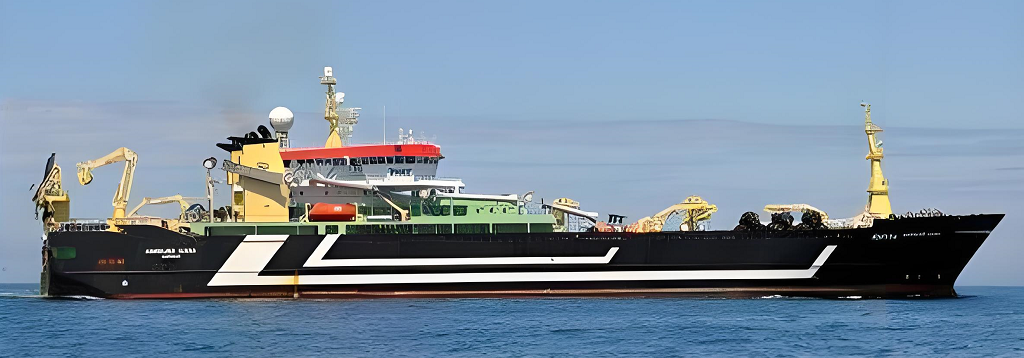

NOAA's Alaska Fisheries Science Center Prepares 2026 Stock Assessments Under New Acting Director

The Alaska Fisheries Science Center is completing its annual stock assessments this fall to inform federal catch-limit decisions for 2026, with Acting Director Dr. Jamal Moss emphasizing expanded stakeholder engagement and accelerated technology adoption as core priorities.
Moss, who began his NOAA career at the center's Auke Bay Laboratories in 2003, assumed the acting director role after serving as Deputy Regional Administrator in the Alaska Regional Office from 2023. His background spans salmon ocean ecology, juvenile marine fish biology, and ecosystem assessment.
Cooperative Research and Council Engagement
Moss identified expanded cooperative research as his top priority, with planning underway for a workshop in Spring 2027 to bring together industry, fishers, scientists, and coastal community members. The goal is to plan specific projects for fiscal year 2028 fieldwork.
He also noted his intent to work closely with the North Pacific Fishery Management Council, which relies on the center's science to manage fisheries that produced an average wholesale value of nearly $4.75 billion annually from 2020 through 2024.
Data Collection and Quality Assurance
The center's stock assessment process combines fishery-independent survey data with fishery-dependent information from observers and commercial landings, plus socioeconomic data. Collected data undergo strict quality assurance and quality control before release to stock assessment authors, who perform additional validation. This multi-layered approach ensures data are standardized before incorporation into assessment models.
Moss stressed that the Magnuson-Stevens Act mandates use of best available data from multiple sources, and that the center is actively investing in technologies to expedite data flows.
Independent Scientific Review
Scientific products undergo review by the Council's Plan Teams—bodies of scientists and managers who independently evaluate models and indices. The Council's Scientific and Statistical Committee, comprising independent experts in population dynamics, biology, statistics, resource economics, and social sciences, then reviews stock assessments and advances advice for annual harvest specifications. Both Plan Team and committee meetings are open to public participation.
Ecosystem Information Integration
The center is advancing ecosystem-based management through several tools: annual Ecosystem Status Reports for the Eastern Bering Sea, Gulf of Alaska, Arctic, and Aleutian Islands; Ecosystem and Socioeconomic Profiles linking climate, ecological, and economic pressures to single species; and Dynamic Structural Equation Models accounting for cascading ecosystem variable interactions.
Staff recently completed a dynamic framework mapping ecosystem metrics against time-varying parameters for Greenland turbot and are developing similar frameworks for Gulf of Alaska and Eastern Bering Sea pollock.
Technology for Data Processing
To address time and labor constraints in processing survey samples, the center is integrating Fourier Transform Near-Infrared Spectroscopy with machine learning models to estimate fish age from otolith chemical and physical properties. Research is also advancing on epigenetic aging—using DNA methyl group analysis—which offers non-lethal age estimation particularly suited to long-lived species such as rockfish and marine mammals.
Community and Traditional Knowledge
Moss highlighted ongoing efforts to strengthen partnerships with Tribal entities and integrate Local and Traditional Knowledge. Existing collaborations include salmon in the Bering Sea, red king crab in Norton Sound, northern Bering Sea groundfish surveys, and fur seals in St. Paul. The center is building a database to present collected information and seeking to expand to additional species identified as high-priority by Alaska Natives.
Fisheries-governance and fleet developments in the North Pacific are monitored by marine-ingredients industry participants; this individual science-center leadership transition and assessment-cycle update does not itself establish an immediate fishmeal or fish-oil supply or price change.
Source
Organization: NOAA Fisheries official publications
Original publication date: 2026-10-07
Original article: Official source link
Where shown, the featured image is displayed directly from the original source page. Image rights remain with the respective owner. Contact VitaSrc to report or request removal of a linked image.
-
 Peru officially cancels the second anchovy season of 2026 - SeafoodSourceOct,17,2026
-
 Peru cancels second anchovy fishing season amidst unprecedented El Niño event - NutraIngredients.comOct,19,2026
-
 Fishmeal supply crisis deepens after key anchovy season cancellation - IntraFishOct,16,2026
-
 Peru authorities destroy eight vessels at illegal Paita shipyardSep,30,2026
-
 Peru's PRODUCE Signs Aquaculture and Market Modernization Pacts in Ayacucho RegionApr,04,2025