
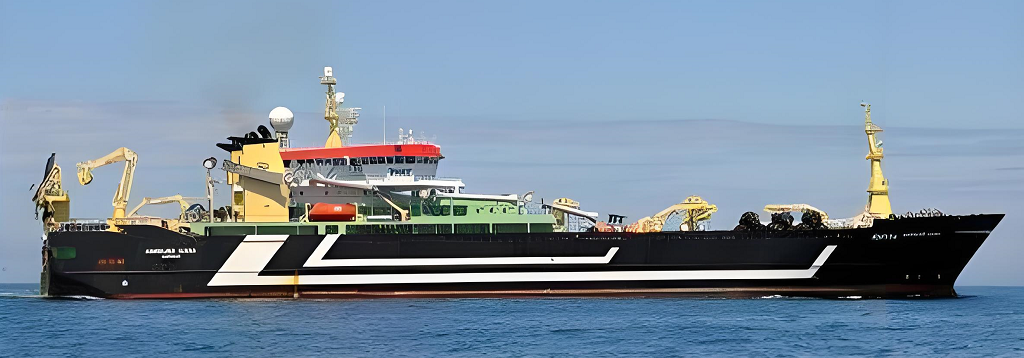

U.S. Unveils America First Seafood Strategy with Five Federal Priorities

The Trump Administration has announced the release of the America First Seafood Strategy, a coordinated federal plan developed following the President's Executive Order on Restoring American Seafood Competitiveness.
The strategy aims to expand sustainable domestic seafood production, modernize critical infrastructure, improve market opportunities for American harvesters and processors, and ensure fair competition in U.S. and global markets. It builds on NOAA's science-based management foundation by aligning federal research, policy, and existing authorities to increase sustainable harvest opportunities, reduce unnecessary costs, rebuild domestic processing and shoreside capacity, and strengthen the competitive position of American seafood.
Five Interconnected Priorities
The plan organizes federal efforts around five pillars: more domestic production and processing, stronger working waterfronts, expanded market access, fairer competition, and greater recognition of seafood's role in healthy diets and national food security.
American Seafood First: Labeling, Marketing, and Market Access
This pillar focuses on giving American seafood a clearer identity and stronger presence in domestic markets. Key actions include establishing a voluntary "U.S.-Caught Seafood" designation for products harvested by American commercial fishermen on U.S.-flagged vessels under U.S. fisheries management. The designation complements existing country-of-origin labeling.
Federal agencies will expand opportunities for American-harvested and processed seafood in government procurement programs, launch a nationwide "Eat American Seafood" campaign, modernize outdated market names for underused species, establish a joint interagency task force to strengthen enforcement against seafood fraud, species substitution, and mislabeling, and improve access to existing market-development programs for small-scale fisheries and cooperatives.
Rebuilding America's Seafood Infrastructure and Processing Capacity
This pillar addresses processing plants, cold and wet storage, working waterfronts, docks, shipyards, and the aging fishing fleet. Federal agencies will streamline permitting, reduce regulatory barriers to private investment, and leverage existing U.S. Department of Agriculture, Small Business Administration, and NOAA financing tools. Priorities include reopening and modernizing processing facilities, improving vessel financing and modernization pathways, and coordinating faster environmental and administrative reviews for waterfront projects.
Success will be tracked through operational indicators such as increases in domestic production and processing, private capital invested, and reduced reliance on foreign supply chains.
Fair Trade and Import Compliance and Enforcement
This pillar focuses on leveling the playing field for American producers. Actions include stronger coordination and enforcement of the Seafood Import Monitoring Program and related authorities, targeted inspections of high-risk imports, use of advanced tools to detect violations, and continued work with the Office of the U.S. Trade Representative to address non-reciprocal barriers, distortive subsidies, and illegal, unreported, and unregulated fishing practices. An annual report will track progress on key seafood trade imbalances and market-access challenges.
Regulatory Reform and Industry Partnership
Building on input received under the Seafood Competitiveness Executive Order, NOAA will advance targeted regulatory reforms in partnership with the regional fishery management councils. Efforts include ensuring catch limits reflect the best available science, reducing compliance costs that do not advance conservation, and improving permitting predictability for responsible marine aquaculture in federal waters.
Industry Context
Fisheries governance and fleet developments are monitored by marine-ingredients participants; this policy announcement does not itself establish an immediate fishmeal or fish-oil supply or price change.
Source
Organization: NOAA Fisheries official publications
Original publication date: 2026-10-23
Original article: Official source link
Where shown, the featured image is displayed directly from the original source page. Image rights remain with the respective owner. Contact VitaSrc to report or request removal of a linked image.
-
 Peru officially cancels the second anchovy season of 2026 - SeafoodSourceOct,17,2026
-
 Peru cancels second anchovy fishing season amidst unprecedented El Niño event - NutraIngredients.comOct,19,2026
-
 Fishmeal supply crisis deepens after key anchovy season cancellation - IntraFishOct,16,2026
-
 Peru authorities destroy eight vessels at illegal Paita shipyardSep,30,2026
-
 Peru's PRODUCE Signs Aquaculture and Market Modernization Pacts in Ayacucho RegionApr,04,2025