
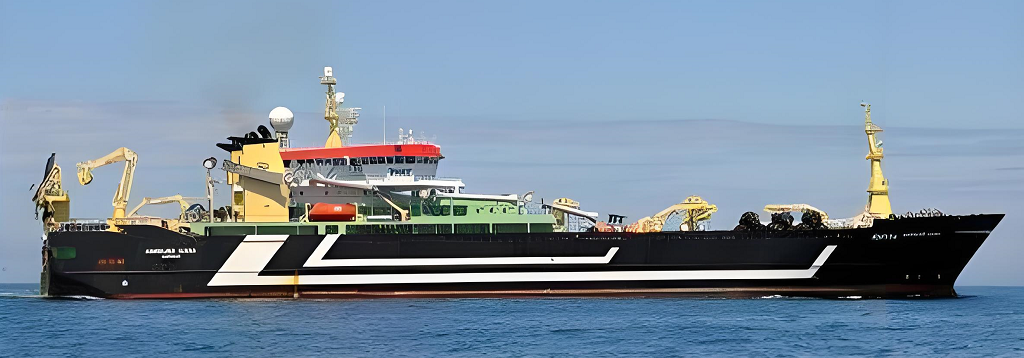

Bering Sea Marine Heatwave Drives 13-Fold Surge in Snow-Tanner Hybrid Crab, Stressing Federal Management Frameworks

A major marine heatwave in the Bering Sea set off a chain reaction that resulted in a dramatic surge in snow-Tanner hybrid crab abundance, posing new challenges for federal fisheries management.
Scientists at the Alaska Fisheries Science Center's Kodiak Laboratory found that hybrid abundance increased by more than 13 times following the 2018–2019 marine heatwave, according to a study published in Proceedings of the National Academy of Sciences. Snow-Tanner hybrid crabs were previously rare. Commercial-sized male hybrids—which can be legally landed during the snow crab fishery—spiked from less than 10 percent of harvestable males to nearly half (41.7 percent) in 2025.
Study lead Erin Fedewa described the findings as unprecedented. The magnitude of the hybrid surge emerged during analysis of data from the 2025 eastern Bering Sea bottom trawl survey, she said, and it became immediately clear that this ecological response would affect fisheries management.
Collapse of Snow Crab Population Identified as Primary Driver
Using dynamic structural equation models, the research team determined that the hybrid boom was not caused directly by warmer waters or increased spatial overlap of mature snow and Tanner crabs. Instead, the catastrophic collapse of the snow crab population following the heatwave likely released hybrids from competition and predation.
The modeling approach tests for cause and effect relationships rather than correlations. Results showed that higher temperatures or reduced sea ice did not directly boost hybrid or Tanner crab survival, and that increased spatial overlap between breeding adult snow and Tanner crabs was not a factor. Rather, billions fewer snow crab created an ecological opening that promoted higher survival of Tanner and hybrid crab. The study concluded that indirect effects from the heatwave-driven snow crab collapse accounted for 76 percent of the hybrid and Tanner crab population surge.
Tanner crab abundance also reached its highest recorded level in 2025, which the team attributed to the snow crab collapse. This expansion was less surprising than the hybrid surge, as Tanner crab is a sub-Arctic species with an affinity to warmer temperatures.
Management Gap Exposed as Hybrid Share of Harvestable Stock Soars
The ecological shift has immediate implications for the federal fishery management plan that establishes annual harvest quotas for Bering Sea crab stocks. Because hybrid crab were historically rare, they were never incorporated into this framework. Existing regulations lack formal mechanisms to set hybrid-specific harvest limits.
In 2025, state managers responded to the initial hybrid pulse by increasing the snow crab harvest limit in hopes that fishermen would target and land hybrids. Co-author Emily Ryznar noted that the 2025 eastern Bering Sea bottom trawl survey found even more commercial-sized male hybrids than in the previous year, indicating that this will continue to be a pressing management challenge.
The study marks the first time an increase in hybridization has been attributed to a discrete marine heatwave event, Fedewa said. The findings point to limitations in using existing assumptions to predict responses to future conditions, and underscore the need for more agile, climate-adaptive management frameworks.
Fisheries governance and fleet developments in the Bering Sea crab fisheries are monitored by marine-ingredients industry participants. This individual scientific finding and management response do not themselves establish an immediate fishmeal or fish-oil supply or price change.
Source
Organization: NOAA Fisheries official publications
Original publication date: 2026-10-19
Original article: Official source link
Where shown, the featured image is displayed directly from the original source page. Image rights remain with the respective owner. Contact VitaSrc to report or request removal of a linked image.
-
 Peru officially cancels the second anchovy season of 2026 - SeafoodSourceOct,17,2026
-
 Peru cancels second anchovy fishing season amidst unprecedented El Niño event - NutraIngredients.comOct,19,2026
-
 Fishmeal supply crisis deepens after key anchovy season cancellation - IntraFishOct,16,2026
-
 Peru authorities destroy eight vessels at illegal Paita shipyardSep,30,2026
-
 Peru's PRODUCE Signs Aquaculture and Market Modernization Pacts in Ayacucho RegionApr,04,2025