
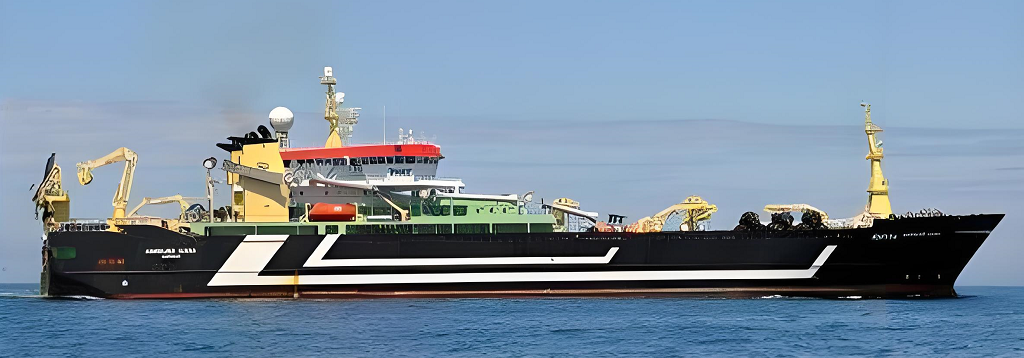

NOAA Fisheries Coordinates Permanent Placement for Non-Releasable Gray Seal at Connecticut Aquarium

United States — A gray seal that stranded twice along the U.S. Atlantic coast within a single year has been placed in permanent human care after federal authorities determined she could not survive in the wild, according to a NOAA Fisheries case report published this month.
The two-year-old seal, nicknamed "Pearl" for her silver coat, was first found in January 2025 as an emaciated five-week-old pup on a beach in Charlestown, Rhode Island, during the peak of gray seal pupping season. Mystic Aquarium in Connecticut rehabilitated her for three months, then released her in April 2025 with a satellite tag and flipper tags to monitor her post-rehabilitation movements.
Pearl stranded again in August 2025 near Gin Beach in Montauk, New York. Responders from the New York Marine Rescue Center found her with a large mass near her pelvic area, back and flipper injuries, and dried epoxy surrounding a cut where her satellite tag had been. Both rear flippers showed v-shaped notches indicating previous flipper tag attachment. NOAA Fisheries consulted experts to evaluate the wounds and possible causes of tag removal, including human interference; the case remains under investigation.
The rescue center's veterinary team determined that Pearl's spinal curvature had worsened since her first stranding, impairing movement in her left hind flipper. Combined with the tag-removal wounds and her second stranding so soon after release, authorities classified her as non-releasable.
NOAA Fisheries followed its established placement protocol for non-releasable marine mammals, matching Pearl with a facility capable of meeting her specialized needs. The Maritime Aquarium at Norwalk in Connecticut was selected based on its pinniped habitat, existing gray seal population, medical expertise, and proximity to the rehabilitation center. At the time of Pearl's stranding, only 23 gray seals lived at nine facilities nationwide, according to the federal agency.
Pearl is now on exhibit at the aquarium and is reported to be adapting to training protocols ahead of schedule. Dylan Salamone, assistant curator of mammals at the Maritime Aquarium, said the facility was selected to establish her training repertoire, including behaviors necessary for integration with the aquarium's other seals.
Gray seal populations have rebounded since the 1972 Marine Mammal Protection Act ended hunting, NOAA Fisheries noted. The species now inhabits the Long Island Sound area for much of the year. Federal law prohibits harassment of marine mammals; the agency advises maintaining at least 50 yards distance and contacting authorized responders if a seal appears to need assistance.
Fisheries governance and fleet developments are monitored by marine-ingredients participants; this individual enforcement and placement action does not itself establish an immediate fishmeal or fish-oil supply or price change.
Source
Organization: NOAA Fisheries official publications
Original publication date: 2026-10-08
Original article: Official source link
Where shown, the featured image is displayed directly from the original source page. Image rights remain with the respective owner. Contact VitaSrc to report or request removal of a linked image.
-
 Peru officially cancels the second anchovy season of 2026 - SeafoodSourceOct,17,2026
-
 Peru cancels second anchovy fishing season amidst unprecedented El Niño event - NutraIngredients.comOct,19,2026
-
 Fishmeal supply crisis deepens after key anchovy season cancellation - IntraFishOct,16,2026
-
 Peru authorities destroy eight vessels at illegal Paita shipyardSep,30,2026
-
 Peru's PRODUCE Signs Aquaculture and Market Modernization Pacts in Ayacucho RegionApr,04,2025