
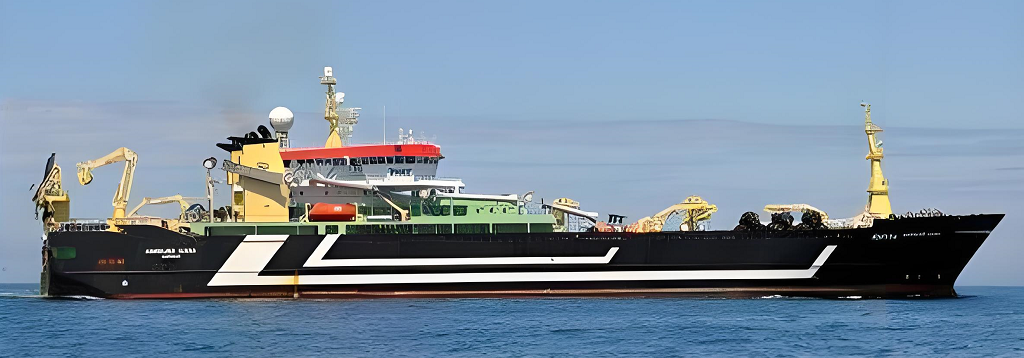

NOAA declares 'very strong' El Niño for 2026–27 with >83% confidence; marine ecosystem monitoring expands across U.S. Pacific and Alaska

In June 2026, NOAA forecasters announced that El Niño had formed in the tropical Pacific. As of October, they have predicted a greater than 83 percent chance of a "very strong event" during the Northern Hemisphere fall and winter 2026–27. Experts expect this event will persist through early spring 2027, with the potential for observable impacts in marine ecosystems for months or even years afterwards.
The El Niño-Southern Oscillation is a powerful atmospheric cycle that occurs in the Pacific Ocean along the Equator and weakens trade winds that blow from east to west. This allows warm surface water in the Pacific to slosh back east towards the Americas. It reduces the amount of cold water upwelling that usually occurs off the coast of South America. This natural phenomenon can have intense atmospheric and oceanographic effects, such as increased precipitation, flooding, and warmer ocean temperatures. These impacts vary by geographic location but are typically felt most directly by regions within the Pacific Basin.
West Coast and California
Because El Niño occurs in the Pacific Ocean basin, the West Coast typically experiences the most direct impacts, including elevated sea levels and unusually warm ocean temperatures. Fishermen in Southern California are already catching large numbers of species such as wahoo, striped marlin, and yellowfin tuna, which are normally found off the coast of Mexico. Other warm-water species have been observed in California waters, including the first documented nesting of olive ridley sea turtles. Scientists are tracking how marine species distributions may change along the entire West Coast.
Based on previous El Niño events, experts anticipate that the region will likely see shifting distributions of fisheries such as market squid and tuna, greater juvenile productivity of rockfish species, more tropical and pelagic species including whale sharks, manta rays, sea turtles, and sea snakes, as well as marlin, dorado (mahi-mahi), and wahoo sought in recreational fisheries. Increased observations of emaciated California sea lion pups and potential increased risk of whale entanglement are also anticipated.
Pacific Islands Region
The Pacific Islands Region is bounded by the Hawaiian Archipelago in the north, American Samoa in the south, and the Marianas Archipelago in the west. It is the largest geographical area within NOAA Fisheries' jurisdiction. Current forecasts suggest that this El Niño event will have a significant impact on the Pacific Islands Region as a whole, but the specific effects and degree of impact will vary by island area.
Hawaiʻi, American Samoa, Guam, and the Commonwealth of the Northern Mariana Islands are located outside the area of greatest predicted warming and heat stress for the next several months. However, these islands will likely still experience significant impacts. In American Samoa, previous El Niño events produced strong, prey-rich currents within known albacore fishing grounds, resulting in higher albacore longline catch rates. El Niño also shifts the western Pacific warm pool, and its associated tuna habitat, eastward, resulting in an eastward shift in offshore fishing opportunities. For Hawaiʻi and the Marianas, El Niño's impact on local catch rate remains less certain and depends on species, fishing method, and location.
The elevated hurricane activity associated with El Niño in the Central Pacific also may affect the chain of operations for local fisheries, especially if major fishing ports are impacted.
Protected species may be impacted by changing food availability, feeding habitat, and nesting conditions. In Hawaiʻi, research by Pacific Islands Fisheries Science Center staff links variation in young monk seal survival to ocean productivity and prey availability. Sea turtles may be affected by hotter nesting beaches or nest flooding. Excessive sand temperatures can reduce egg survival and produce more female hatchlings, while nest flooding can kill developing embryos. Changes in ocean conditions may also redistribute prey for seabirds, whales, and dolphins.
Prolonged warming events can cause corals to lose the symbiotic algae that supply much of their energy, resulting in bleaching and, if stress persists, mortality. Past El Niño-associated events caused widespread bleaching in Hawaiʻi and substantial coral losses at Swains Island in American Samoa. In Guam, El Niño-associated sea-level declines also exposed shallow corals to air during extreme low tides, causing tissue death.
Gulf of Alaska
The intensity of El Niño's impact on the Gulf of Alaska is highly dependent on both oceanographic and atmospheric conditions. El Niño can also exacerbate pre-existing environmental conditions. During El Niño years, the Gulf of Alaska tends to experience relatively warmer surface conditions.
Dr. Bridget Ferriss, a fisheries biologist with the Alaska Fisheries Science Center, notes that if water temperatures increase, plankton species with lower nutritional value will tend to dominate local ecosystems. "Some species have higher lipid, or fat, contents, which makes them more nutritious," Ferriss notes. "As water temperatures increase, less-nutritious species tend to flourish and make up a larger proportion of the zooplankton and phytoplankton communities in the Gulf of Alaska. That impacts everything that feeds on them, and can have implications for energy moving up the food web."
Alaska's groundfish, which includes species like Pacific cod and Alaska pollock, are some of the region's most commercially important species. The potential long-term impacts of El Niño on these fisheries are still somewhat unpredictable. Ferriss says it is unlikely there will be immediate changes in 2027. While the distributions of some species may shift slightly, adult groundfish tend to be comparatively more adaptable to short-term environmental changes than other species.
If warmer waters occur in the region, larger cohorts of certain groundfish species may follow the event. Sablefish, rockfish, Pacific herring and sand lance tend to do well in warmer years. However, certain species, especially cold water-associated ones like capelin and the eggs of Pacific cod, have very narrow thermal windows for survival. These impacts would not be expected to manifest in terms of fisheries production for at least another few years.
Research from past El Niños and marine heatwaves strongly suggests marine mammals such as harbor seals, Steller sea lions, and humpback whales are likely to be impacted should the warming effects reach the Gulf of Alaska. Scientists expect these impacts to manifest as population declines driven by changes in reproductive and survival rates.
Eastern Bering Sea and Aleutian Islands
Impacts of El Niño on the Eastern Bering Sea and Aleutian Islands marine ecosystems are more uncertain. If warming conditions do arrive in the Aleutian Islands, they will add to a multi-year trend of warm conditions in the region. The Eastern Bering Sea ecosystem is largely influenced by seasonal winter sea ice, the extent of which has no observed correlation to El Niño.
Warming waters across Alaska can impact marine ecosystems, whether caused by El Niño or not. These include shifts in crab and groundfish distributions, which change predator-prey interactions. Warmer waters can also lead to increased risk of harmful algal blooms. These blooms can have adverse impacts on marine mammals in the region, as was observed earlier this year with Northern fur seals on St. George Island.
Monitoring and Fleet Context
NOAA Fisheries is actively deploying tools and strategies to monitor and predict El Niño's impact on the marine environment across the United States. These include surveys aboard NOAA vessels and aircraft, ocean sampling using uncrewed vehicles such as gliders, state-of-the-art ocean and biological response forecasting models, and cooperative research engaging local commercial and recreational fishermen.
Fisheries governance and fleet developments associated with this El Niño event are monitored by marine-ingredients participants. This individual forecast and monitoring action does not itself establish an immediate fishmeal or fish-oil supply or price change.
Source
Organization: NOAA Fisheries official publications
Original publication date: 2026-10-08
Original article: Official source link
Where shown, the featured image is displayed directly from the original source page. Image rights remain with the respective owner. Contact VitaSrc to report or request removal of a linked image.
-
 Peru officially cancels the second anchovy season of 2026 - SeafoodSourceOct,17,2026
-
 Peru cancels second anchovy fishing season amidst unprecedented El Niño event - NutraIngredients.comOct,19,2026
-
 Fishmeal supply crisis deepens after key anchovy season cancellation - IntraFishOct,16,2026
-
 Peru authorities destroy eight vessels at illegal Paita shipyardSep,30,2026
-
 Peru's PRODUCE Signs Aquaculture and Market Modernization Pacts in Ayacucho RegionApr,04,2025